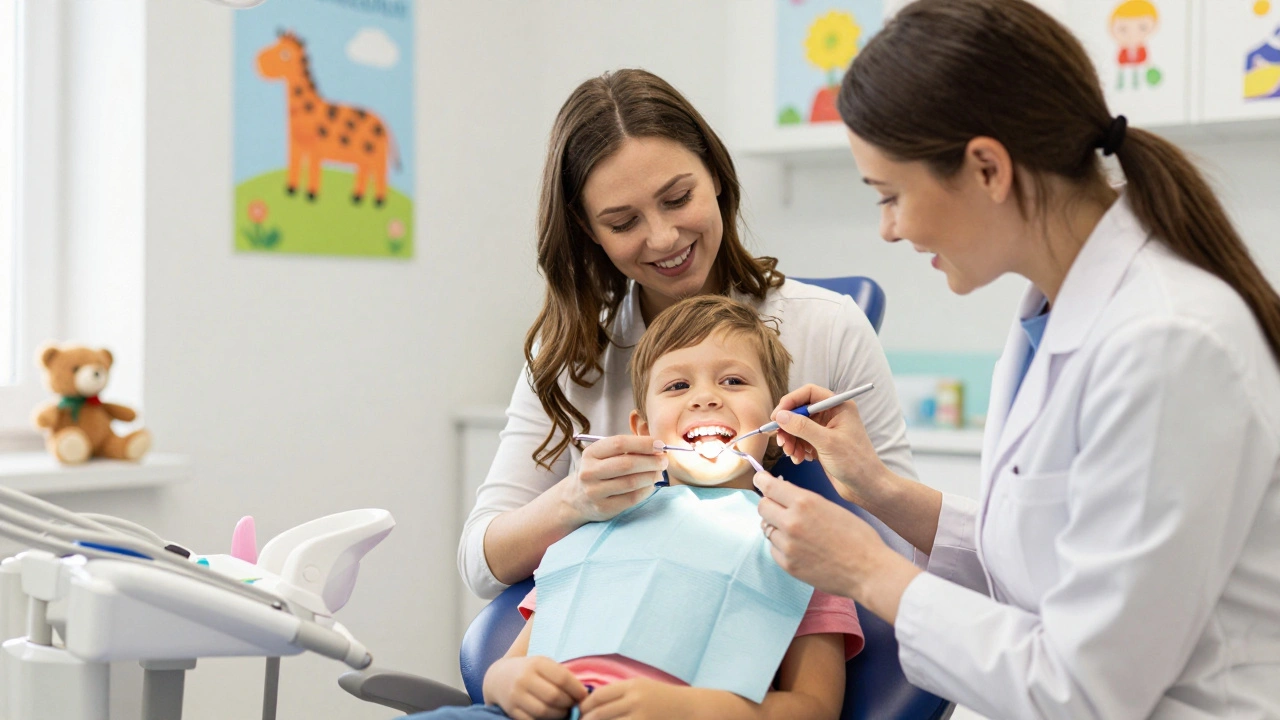
Dítě u zubaře: Co potřebujete vědět, aby byla návštěva klidná a bez bolesti
When a child visits the dentist for the first time, it’s not just about checking for cavities—it’s about building a relationship with their dětská stomatologie, specializovaná oblast stomatologie zaměřená na péči o zuby a ústní dutinu dětí od prvního zoubku až po dospělost. Also known as pediatrická stomatologie, it focuses on prevention, early detection, and creating positive experiences that last a lifetime. Many parents wait until there’s pain or visible damage, but the best time to go is before anything goes wrong. The Czech Dental Association recommends the first visit by the child’s first birthday, or within six months of the first tooth appearing.
What happens during that first visit? It’s not a drilling session. The dentist checks how the teeth are developing, looks for signs of early decay, and examines the gums and jaw. They’ll also show you how to clean your child’s teeth properly—because brushing with a regular toothbrush isn’t enough when they’re two. zubní hygiena pro děti, specifická sada návyků a nástrojů navržených pro věk a vývoj dítěte includes using the right amount of fluoride toothpaste (a smear the size of a grain of rice under age three), avoiding sugary drinks before bed, and switching from a bottle to a cup by age one. Skipping these steps leads to early childhood caries, which affects nearly 40% of Czech children by age five.
Strach je normální—yours and theirs. But the way you talk about the dentist matters more than you think. Don’t say "it won’t hurt"—that plants the idea that it might. Instead, say "the dentist helps keep your teeth strong" or "they count your teeth and give them a shiny bath." Use books or videos about dentist visits to make it familiar. And never use the dentist as a threat: "If you don’t brush, you’ll have to go to the dentist." That turns a helper into a monster.
Some kids need extra support. If your child is anxious, sedation or nitrous oxide (laughing gas) is safe and common in pediatric clinics. It’s not for every visit, but it can turn a traumatic experience into a calm one. The goal isn’t to fix problems—it’s to prevent them. That’s why regular checkups every six months are so important. Catching a tiny spot of decay early means no drilling, no shots, and no fear next time.
And don’t forget the role of první návštěva zubaře, první kontaktní setkání dítěte s odborníkem na ústní zdraví, které formuje jeho celoživotní přístup k péči o zuby. This isn’t just a medical step—it’s emotional training. Children who start early are more likely to keep going. They learn that dental care is normal, not scary. They grow up knowing their teeth matter.
What you’ll find in the articles below are real, practical answers to the questions parents ask every day: How do I clean my toddler’s teeth? What if my child refuses to brush? When should we start flossing? Is it okay to use an electric toothbrush? Why does my child have brown spots on their front teeth? These aren’t theoretical tips—they’re the same advice dentists give in their clinics across the Czech Republic, written in plain language so you don’t have to guess what to do next.
Připravte se na první návštěvu u dětského zubaře s klidem. Zjistěte, co se děje na první návštěvě, jak uklidnit dítě, co si vzít a jak reagovat, když se dítě bojí. Prevence začíná dřív, než začne bolet.